
Fun Activities and G Words for Speech Therapy Success
Master the G sound with our guide on g words for speech therapy. Discover word lists, fun at-home activities, and expert tips to boost your child's confidence.
 By Speech Blubs Team•Apr 27, 2026•14 min.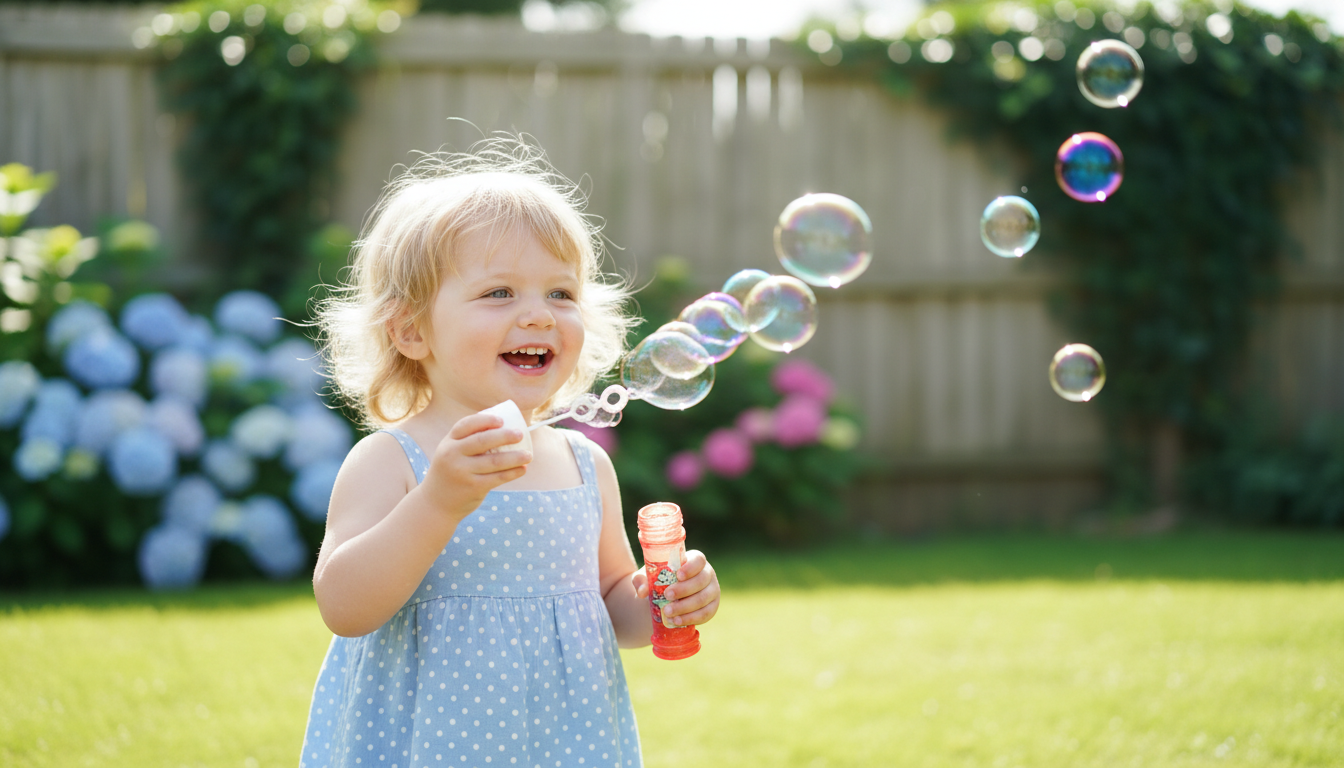
Table of Contents
- Introduction
- Understanding the "G" Sound in Speech Therapy
- Initial G Word Lists (Beginning of the Word)
- Medial G Word Lists (Middle of the Word)
- Final G Word Lists (End of the Word)
- Practical Scenarios for At-Home Practice
- Engaging Activities and Games for G Words
- Transitioning from Words to Sentences
- Creating Joyful Family Learning Moments
- Why Choose the Speech Blubs Yearly Plan?
- Setting Realistic Expectations
- Summary of G Word Practice Tips
- Conclusion
- FAQ
Introduction
Did you know that the "G" sound is often one of the first "back-of-the-mouth" sounds a child learns, yet it remains one of the most common hurdles in early speech development? If your little one is swapping their "G" sounds for "D" sounds—saying "dame" instead of "game" or "doat" instead of "goat"—you aren’t alone. This common speech pattern, known as "fronting," can be frustrating for both you and your child, but it is a challenge that can be overcome with the right tools and a lot of joyful practice.
At Speech Blubs, our mission is to empower children to speak their minds and hearts. We understand the journey because our founders grew up with speech challenges themselves. They created the tool they wished they had: a way to turn speech therapy into "smart screen time" that feels like play rather than a chore. We believe that every child deserves to communicate with confidence, and we are here to support that 1 in 4 children who may need a little extra help finding their voice.

In this post, we will explore everything you need to know about "G" words for speech therapy. We will break down how the sound is made, provide extensive word lists for all levels of learners, and offer practical, play-based activities you can do at home. Our goal is to provide you with a roadmap to help your child master the "G" sound while creating meaningful family connections. By the end of this article, you’ll have a full toolkit of strategies to turn daily routines into speech-building opportunities.
Understanding the "G" Sound in Speech Therapy
Before we dive into the word lists, it is helpful to understand what is actually happening in the mouth when we produce a "G" sound. In the world of speech-language pathology, the /g/ sound is described as a "voiced velar stop." While that sounds technical, the concept is quite simple for parents to grasp.
How the "G" Sound is Produced
To make a "G," the back of the tongue lifts up to touch the soft palate (the "velum") at the back of the roof of the mouth. This momentarily stops the airflow. When the tongue drops, the air is released in a quick burst. Because it is a "voiced" sound, our vocal cords need to vibrate. You can feel this by placing your hand on your throat and making the "G" sound—you should feel a little "motor" running!
In contrast, the "K" sound is made in the exact same spot, but the voice is "off" (unvoiced). Many children who struggle with "G" will often substitute it with a "D" sound because "D" is made at the front of the mouth, which is much easier for them to see and imitate. This is why we focus on "back sounds" during therapy.
Why Peer Modeling Matters
At Speech Blubs, we use a unique scientific methodology called "video modeling." We’ve found that children are much more likely to attempt a sound when they see another child doing it. This taps into "mirror neurons" in the brain—when a child watches a peer make the "G" sound in our app, their brain reacts as if they are making the sound themselves. It reduces the "performance pressure" and turns learning into a social, imitative game.

Our app provides a powerful alternative to passive screen time like cartoons. Instead of just watching, your child is invited to participate, mirror, and engage. To see this in action, you can download Speech Blubs on the App Store or Google Play to begin your journey today.
Initial G Word Lists (Beginning of the Word)
When starting speech therapy for the "G" sound, we usually begin with "initial G" words. These are words where the "G" sound is right at the front. Starting here helps the child focus on the sound immediately as they begin to speak.
One-Syllable Initial G Words
These are the building blocks. They are short, punchy, and often represent objects your child sees every day.
- Go (A great functional word!)
- Get
- Gum
- Gas
- Guy
- Gap
- Gift
- Girl
- Goat
- Gate
- Gull
- Gold
- Game
- Gown
Two-Syllable Initial G Words
Once your child is comfortable with single sounds, adding a second syllable increases the complexity.
- Garden
- Gallon
- Garbage
- Guitar
- Gopher
- Goldfish
- Gasket
- Gargle
- Giggle
- Goodbye
Three-Syllable Initial G Words
These words require more coordination and breath support.
- Gorilla
- Gasoline
- Gallery
- Guardian
- Gooseberry
- Gathering
For parents who are unsure if their child is meeting their speech milestones, we recommend a simple check-in. Take our quick 3-minute preliminary screener to get a simple assessment and a free 7-day trial. It’s an easy way to see where your child stands and get a customized plan for their development.
Medial G Word Lists (Middle of the Word)
The "medial" position is often the trickiest because the child has to navigate into the "G" sound from one sound and out of it into another. It requires "lingual agility"—the ability to move the tongue quickly and accurately.
Two-Syllable Medial G Words
- Wagon
- Tiger
- Dragon
- Sugar
- Magnet
- Eagle
- Bigger
- Doggy
- Piggy
- Yoga
Three+ Syllable Medial G Words
- Alligator
- Spaghetti
- Magazine
- Hamburger
- Negative
- Category
Practicing these words can be made much more exciting with visual aids. For a parent whose 3-year-old "late talker" loves animals, the "Animal Kingdom" section of the Speech Blubs app offers a fun, motivating way to practice words like "tiger" and "alligator." You can create your account and begin your 7-day free trial today to explore these categories together.
Final G Word Lists (End of the Word)
"Final G" words are those where the sound appears at the very end. Sometimes children "drop" the ends of their words, so practicing these is essential for overall clarity.
One-Syllable Final G Words
- Dog
- Pig
- Big
- Bag
- Log
- Bug
- Mug
- Tag
- Rug
- Wig
- Leg
- Egg
Two-Syllable Final G Words
- Hotdog
- Ladybug
- Bulldog
- Dishrag
- Nutmeg
- Eggnog
Three-Syllable Final G Words
- Catalog
- Pollywog
Practical Scenarios for At-Home Practice
Generic drills can sometimes feel like a chore, so we always encourage "embedded practice." This means finding moments in your existing daily routine to sneak in "G" words. Here are a few relatable scenarios:
The Grocery Store "G" Hunt
When you are walking through the aisles, turn it into a game. Can you find the green grapes? Look for the garlic. Did we remember the eggs? Every time you put an item in the bag, emphasize the final "G" sound. "One bag, two bags!"
Backyard "G" Exploration
If you are outside, look for bugs. Maybe you see a ladybug or a grasshopper (starting with "G"). If you have a garden, talk about digging in the dirt. "Look at the big log!" These natural interactions help generalize the speech skills from a "therapy moment" into real-world communication.
Snack Time "G" Fun
Snack time is a golden opportunity (pun intended!). Offer your child goldfish crackers or grapes. If they want more, encourage them to use the word "get" or "give." For example: "Give me grapes, please!"
Our scientific approach is rooted in making these moments feel effortless. Our method is backed by science, placing us in the top tier of speech apps worldwide, ensuring that the "smart screen time" your child spends with us translates into these real-world wins.
Engaging Activities and Games for G Words
To keep your child motivated, variety is key. Here are some of our favorite "G" focused games that require little to no preparation.
1. The "Go" and "Stop" Race
This is a classic for a reason. Whether you are using toy cars or running in the backyard, use the word "GO" as the signal to start. Have your child be the "race master" so they are the ones practicing the initial "G."
- Target Word: Go!
- Benefit: Builds confidence and teaches the power of communication.
2. The "Piggy" Bank Challenge
If you have a toy piggy bank (or just a box with a slot), use coins or buttons. Every time your child puts one in, they say "Pig" or "Piggy."
- Target Word: Pig, Piggy, Get.
- Benefit: Practices the medial and final "G" sounds through repetition.
3. Bubble "Gum" (Soap Bubbles)
While we don't always recommend actual gum for toddlers, "soap bubbles" can be called "G-G-G-Gum" bubbles for the sake of the game. When you blow them, have the child try to "Get" them or "Grab" them.
- Target Word: Gum, Get, Grab.
- Benefit: Encourages lip and tongue movement through play.
4. Mirror Mimicry
Sit in front of a mirror with your child. Practice making "silly faces" that involve opening the mouth wide to see the back of the throat. Try to make the "G" sound together and watch how the tongue moves. This is essentially a low-tech version of the video modeling we provide in the app. See what other parents are saying about how this type of modeling has helped their children's success.
Transitioning from Words to Sentences
Once your child is accurately producing single "G" words, it’s time to bridge the gap to phrases and full sentences. This is a big step! We want to move from "Goat" to "The goat is big."
G-Heavy Phrases
Try practicing these short, 2-3 word bursts:
- Good job!
- Big dog.
- Green grass.
- Get the ball.
- Go gate.
- My gift.
G-Sound Sentences
Once phrases are easy, move to full sentences. You can make up silly stories to keep it lighthearted.
- The girl has a gold guitar.
- The goat ate the green grapes.
- Get the garbage bag, please.
- The hungry alligator is big.
- Go to the garden to dig.
Creating Joyful Family Learning Moments
At Speech Blubs, we believe that speech therapy shouldn't just be about the child; it should be about the family. Using our app is designed to be a co-play experience. Instead of handing the phone to your child and walking away, sit with them. Laugh at the funny filters together. Cheer when they successfully imitate a peer.
These "joyful moments" are where the real progress happens. When a child feels supported and sees that learning is a fun family activity, their frustration levels drop. This reduction in frustration often leads to a "language explosion," where the child feels safe enough to try new words they were previously afraid to say.
We provide a powerful tool for family connection, but the magic happens when you use it together. Whether it's practicing "G" words while making dinner or playing a quick game before bed, consistency and connection are your best allies.
Why Choose the Speech Blubs Yearly Plan?
We want to make our tools accessible and effective for as many families as possible. While we offer a monthly subscription, we always recommend the Yearly Plan for families who are serious about seeing progress.
Transparent Pricing
- Monthly Plan: $14.99 per month.
- Yearly Plan: $59.99 per year.
Why the Yearly Plan is the Best Value
The Yearly plan isn't just about saving money (though it does save you 66% compared to the monthly rate—breaking down to just $4.99/month!). It is built to provide a more holistic learning experience.
The Yearly Plan includes exclusive features:
- 7-Day Free Trial: Try everything before you commit.
- Reading Blubs App: Access to our companion app that focuses on literacy and reading skills.
- Early Access: Be the first to try our new updates and features.
- Priority Support: A 24-hour support response time to ensure you never feel stuck.
The Monthly plan does not include the Reading Blubs app or the extended trial benefits. For the most effective "smart screen time" experience, the Yearly plan is the clear choice for our community.
Setting Realistic Expectations
It’s important to remember that every child’s speech journey is unique. While some children might start using "G" words more clearly in a matter of weeks, others may take months of consistent practice.
We don't promise that your child will be giving public speeches in a month. Instead, we focus on the benefits of the process: fostering a love for communication, building their inner confidence, and developing those key foundational skills. Our app is a powerful supplement to your child's overall development plan and works wonderfully alongside professional therapy.
Celebrate the small wins. If they say "g-g-g" instead of "d-d-d," that’s a victory! If they point to a dog and say the word clearly for the first time, that’s a reason to celebrate. Those small moments build the bridge to a lifetime of effective communication.
Summary of G Word Practice Tips
To recap, here is how you can effectively tackle "G" words for speech therapy at home:
- Start with the basics: Use initial "G" words like "Go" and "Get."
- Use Peer Power: Leverage video modeling through Speech Blubs to show your child other kids making the sounds.
- Integrate into life: Find "G" words in the grocery store, the backyard, and during snack time.
- Keep it playful: Use races, piggy banks, and bubbles to keep motivation high.
- Choose the right plan: Use the Yearly plan to get the best value and access to Reading Blubs.
Conclusion
Mastering the "G" sound is a significant milestone in a child's speech development. It opens up a whole new world of words—from talking about their favorite games to asking for a big hug. By using the word lists and activities provided in this guide, you are giving your child the foundational tools they need to "speak their minds and hearts."
Remember, you are your child's best teacher and most enthusiastic cheerleader. By turning speech practice into a joyful, shared experience, you are not just teaching them sounds; you are building their confidence and strengthening your bond. We are honored to be a part of that journey with you.
Ready to see your child's progress take off? Start your journey today and give your child the gift of clear communication. Download Speech Blubs on the App Store or Google Play and start your 7-day free trial now! For the best value, be sure to select the Yearly plan to unlock Reading Blubs and exclusive support.
FAQ
1. At what age should a child be able to say the "G" sound?
Most children typically acquire the "G" sound between the ages of 3 and 4. However, it is common for some children to continue refining this sound slightly later. If your child is over 4 and still substituting "G" with "D" (e.g., saying "tate" instead of "gate"), it may be a good time to start targeted practice or consult a professional.
2. My child says "D" instead of "G." Is this normal?
Yes, this is a very common phonological process called "fronting." Because the "D" sound is made at the front of the mouth and "G" is made at the back, children often find "D" easier to produce. Speech therapy exercises, like those in Speech Blubs, help teach the child how to move their tongue to the back of the mouth to produce the "G" sound correctly.
3. How often should we practice "G" words for speech therapy?
Consistency is more important than duration. We recommend short, frequent sessions—about 5 to 10 minutes once or twice a day. Integrating practice into daily routines, like during bath time or while driving, makes the practice feel natural and less like a "lesson."
4. Can an app really help with my child's speech delay?
Apps like Speech Blubs are designed as a "smart screen time" tool to supplement development. Our peer-led video modeling is based on proven scientific principles that encourage imitation and engagement. While it is not a replacement for professional medical advice or therapy for severe delays, it is a powerful resource for building confidence, reducing frustration, and practicing essential speech sounds in a joyful way.
About the author